
THANK YOU FOR SUBSCRIBING
× 
Enterprise Security Mag Weekly Brief
Be first to read the latest tech news, Industry Leader's Insights, and CIO interviews of medium and large enterprises exclusively from Enterprise Security Mag
A featured contribution from Leadership Perspectives, a curated forum for enterprise security leaders, nominated by our subscribers and vetted by the Enterprise Security Magazine Editorial Board.

Ethos [NSE: ETHOSLTD]
Building Security Programs for the AI Era
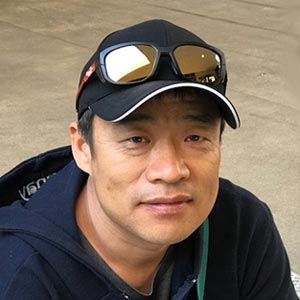
Steve Kim
Steve Kim, Director of Security at Ethos, blends deep technical expertise with strategic leadership, building frameworks, leading secure design reviews, and advancing AI governance to ensure regulated data and innovation coexist safely across modern application environments.
When I started in security, the work was largely defensive, firewalls, patching and the SIEM. Today, leading security at Ethos, my week is mostly forward-looking. One morning, I'm reviewing a new AI integration before it ships. The next afternoon, I'm in a secure design review with engineers walking through how a feature handles PII and PHI. Later that week, I'm evaluating DLP and AI guardrail vendors, or working through a risk framework that lets leadership decide which AI surfaces to enable, restrict or disable. That shift, from gatekeeping infrastructure to being a design partner across application and AI engineering, is the modern security leader's job description.
How My Background Shapes the Program
I came up as a security architect before stepping into the Director role at Ethos, and that shows in how I build. I still read code, run design reviews and write the frameworks our team uses. I think that matters. The moment a security leader becomes purely strategic, they lose the ability to challenge their team's assumptions or call out the gaps that aren't in the slide deck.
That bias toward depth shapes how I've structured the program. Our secure design review process is anchored in data classification, and new features are reviewed against industry security standards and technical safeguards before they ship. Code reviews, vendor technical reviews and AI tool reviews all run off the same classification model. Frameworks like these aren't bureaucracy. They're how a small team scales consistent judgment across hundreds of engineering decisions a quarter.
Application Security as the Center of Gravity
Most of the meaningful risk in a modern insurtech lives in the application layer, how data flows, how identity is enforced, how features interact with regulated data and how third-party integrations expand the trust boundary. That's where I spend most of my time.
“We built security as a design partner anchored in code frameworks and AI governance so innovation ships safely with trust embedded in every feature.”
The secure design review is the most important control we run. Every feature that touches PHI, PII or sensitive financial data goes through a structured walkthrough before development gets too far down the road: what data does it handle, where does it flow, who can access it, how is it encrypted, what is the retention model, who are the downstream third parties and what happens if it leaks. Catching ambiguity at the design stage is exponentially cheaper than catching it in code review, and orders of magnitude cheaper than catching it in production.
The other dominant theme is regulated data flowing through new surfaces. We handle PHI and PII at scale. The underlying controls, encryption, retention, breach notification and BAA coverage, aren't new, but the application surface keeps expanding as AI tools, agents and third-party connectors enter the stack. Every new integration is an opportunity for a sensitive field to take a path no one designed for, and that's where the review process has to be sharp.
Ai Security and Ai Data Governance
This is where I've invested most heavily over this year. We built an AI data classification model that maps each Ethos data class to what's allowed in which AI surface. Tier 1 is open. Tier 2 requires Zero Data Retention, a DPA with notraining clauses, masking and anonymization, audit logging and anomaly alerting. Tier 3 is a hard stop.
Alongside the data tiers, we built an AI risk framework that, among other risks, focuses on three attack vectors: insider misuse, prompt injection and hallucination, along with feature-level risks and recommended controls. The point is to give leadership a clear basis to say yes confidently, not a vague no by default.
The harder problems sit in agentic AI. Prompt injection in indirect contexts, a document an agent was asked to summarize, an email field passed through KYC screening or a web page rendered by a browsing tool, is the new SQL injection. MCP servers expand the blast radius of any account compromise. A misconfigured connector has the potential to turn a chat tool into a data exfiltration channel. Solving these problems requires innovative thinking and new solutions, as traditional endpoint DLP doesn't see what an LLM is doing with the data once it enters a prompt.
Application security and AI security are converging faster than most programs are organized for. The next generation of input validation isn't escaping a SQL string. It's defending against an untrusted instruction buried in a PDF or email that an agent is reading on your behalf.
Balancing Security with Velocity.
When an engineering team brings me a feature that touches PII and PHI through a new AI integration, my job isn't to block it. It's to find the right tier, the right controls and the right risk-managed exception if a control isn't fully in place. Engineers bring you the risky work earlier when they trust you to engage with it constructively. The worst outcome isn't a "no." It's a team that ships without you knowing.
Advice for Emerging Leaders
Three things. Stay technical longer than feels comfortable, credibility earns you the room to lead. Write things down, every framework I've built started as a messy draft that became the team's shared mental model. And invest in your people. Programs scale through people, not tools.
Security is no longer a back-office function. It's a design partner, a business enabler and the team that has to figure out how to ship safely with technologies the industry is still learning to govern. That's a privilege. It's also the job.
The articles from these contributors are based on their personal expertise and viewpoints, and do not necessarily reflect the opinions of their employers or affiliated organizations.
