THANK YOU FOR SUBSCRIBING
× 
Enterprise Security Mag Weekly Brief
Be first to read the latest tech news, Industry Leader's Insights, and CIO interviews of medium and large enterprises exclusively from Enterprise Security Mag
Enterprise Security Magazine

AhnLab [KOSDAQ: 053800]
Securing Convergence In Cyber Physical Environments

Cybersecurity is being reshaped by the convergence of IT and operational systems as environments that were once separate now operate as interconnected structures. Threats no longer remain confined to isolated endpoints and instead move across industrial control systems, enterprise networks and edge devices that share common architectures. As this interconnection increases exposure, protection depends on maintaining visibility, control and response across systems that were historically segmented. In this setting, security execution becomes a system-level function where resilience is defined through alignment across digital and physical operations.
As convergence continues to reshape how systems interact, organizations are rethinking how security is structured, moving away from fragmented tools toward integrated models that operate across environments. The challenge extends beyond detection to maintaining continuity in systems that cannot afford disruption. AhnLab, a cybersecurity provider delivering protection across endpoints, networks and operational systems, addresses this need through an integrated architecture that enables consistent visibility, coordinated response and reliable control across distributed and interconnected environments.
Coordinated Protection across IT and OT Layers
 Protection across converged environments begins with coordination rather than isolated defense mechanisms. AhnLab structures its capabilities so that endpoint, network and operational layers function as interconnected components within a broader security system. Endpoint protection identifies malware, ransomware and abnormal behavior at early stages, generating signals that indicate potential compromise. These signals are not treated independently but contribute to a wider monitoring framework that tracks activity across environments, allowing security teams to understand how threats develop and move within systems.
Network visibility strengthens this foundation through continuous monitoring of traffic patterns and communication flows. Suspicious activity, including lateral movement, can be identified in relation to endpoint signals, creating a more complete view of system behavior. Centralized management enables real-time observation of these interactions, reducing delays between detection and response while improving accuracy in threat assessment. The ability to correlate activity across layers ensures that response actions address root causes rather than isolated symptoms.
Threat intelligence reinforces coordination by continuously updating detection models based on emerging attack patterns. Intelligence is integrated into the system so that protection evolves alongside threat landscapes without requiring manual intervention. As new vulnerabilities or techniques are identified, security controls adjust accordingly, maintaining alignment with current risks. This dynamic adaptation supports consistent protection while preserving operational stability across environments that require uninterrupted performance.
Integration as a Strategic Foundation
The effectiveness of coordinated protection depends on how well security functions are integrated across systems with different operational priorities. IT environments prioritize flexibility and scalability, while operational systems require stability and minimal disruption. Bridging these domains requires an approach that maintains consistency in protection without affecting performance or reliability. Integration therefore becomes a structural requirement rather than an added capability.
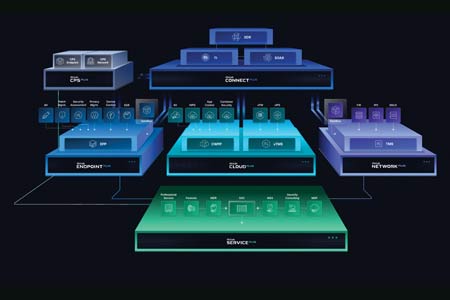 AhnLab addresses this requirement through a unified platform that consolidates visibility and control across endpoints, networks and operational systems. Data generated across these layers is analyzed within a shared framework, enabling faster identification of anomalies and more precise response actions. A consolidated view reduces blind spots and allows security teams to understand relationships between events, improving overall situational awareness across complex environments.
Operational consistency is maintained through standardized policies applied across systems, reducing the need for separate configurations. Security teams can enforce controls uniformly, ensuring alignment with organizational objectives while minimizing gaps that could be exploited. At the same time, flexibility is preserved through modular deployment, allowing capabilities to expand as infrastructure evolves without introducing fragmentation or operational disruption.
From Security Architecture to Operational Outcomes
The value of an integrated security model becomes clear in environments where continuity is essential. In manufacturing, disruptions to operational systems can halt production and create significant financial impact. Coordinated protection enables early detection of threats, reducing the likelihood of interruptions while maintaining stability across critical processes that depend on uninterrupted system performance.
Energy and utility environments operate under similar constraints, where reliability is directly linked to service delivery. Visibility across IT and operational layers allows threats to be identified and addressed without affecting performance. This alignment between protection and operations supports continuity while ensuring that security measures do not interfere with essential functions.
Enterprise environments also benefit as systems become increasingly interconnected. Threats can move across endpoints, networks and applications, making isolated defenses insufficient. Coordinated detection and response improve containment, limiting the spread of incidents and reducing overall risk exposure. Security becomes embedded within operations rather than functioning as a separate layer.
Measured outcomes include faster response times, improved detection accuracy and consistent enforcement across systems. These improvements contribute to stronger operational resilience, enabling organizations to maintain performance despite evolving threats. Regulatory requirements further reinforce the need for integrated approaches, as organizations must demonstrate visibility and control across systems while maintaining efficiency in operations.
Evolving threat landscapes also require greater alignment between security strategy and day-to-day operations. Static defense models are no longer sufficient in environments where attack methods continuously change and systems remain interconnected. Organizations must ensure that protection adapts alongside operational demands without introducing complexity that slows response. Continuous monitoring, combined with structured analysis of system activity, enables earlier identification of anomalies and more confident decision making. Over time, this creates a more stable security posture where detection, response and adjustment operate as a connected cycle, strengthening overall resilience while maintaining consistency across both digital and operational environments.
As digital and operational systems continue to converge, the importance of coordinated execution will increase. Organizations require security models that align detection, response and control within a unified structure capable of adapting to dynamic environments. AhnLab supports this need through an approach that integrates visibility, intelligence and execution, enabling organizations to manage complexity and sustain secure operations across interconnected systems.

Company
AhnLab [KOSDAQ: 053800]
Management
Kang Suk-kyoon, CEO
Description
AhnLab is a global cybersecurity company delivering integrated security solutions across endpoints, networks, cloud and threat intelligence. It enables organisations to detect, prevent and respond to evolving cyber threats through unified, data-driven protection platforms.